What is overrun?
Overrun is the share of air whipped into the ice cream. 100 % overrun means the volume doubles: 1 litre of mix becomes 2 litres of soft serve. The air makes the ice cream creamy and light; too much of it makes it bland.
What a pump brings
- Creamier, more even texture
- Faster freezing in the cylinder
- More portions from the same amount of mix
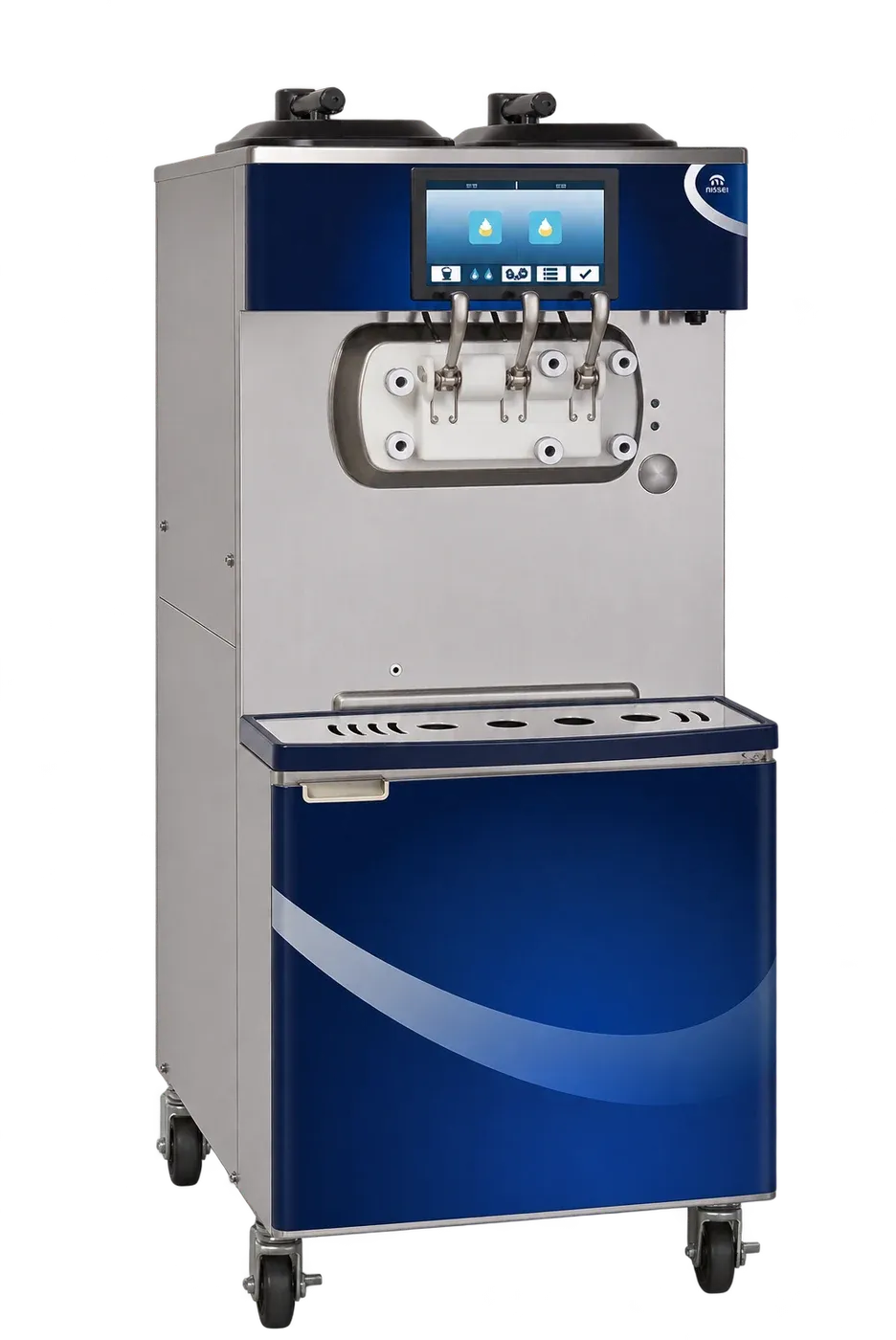
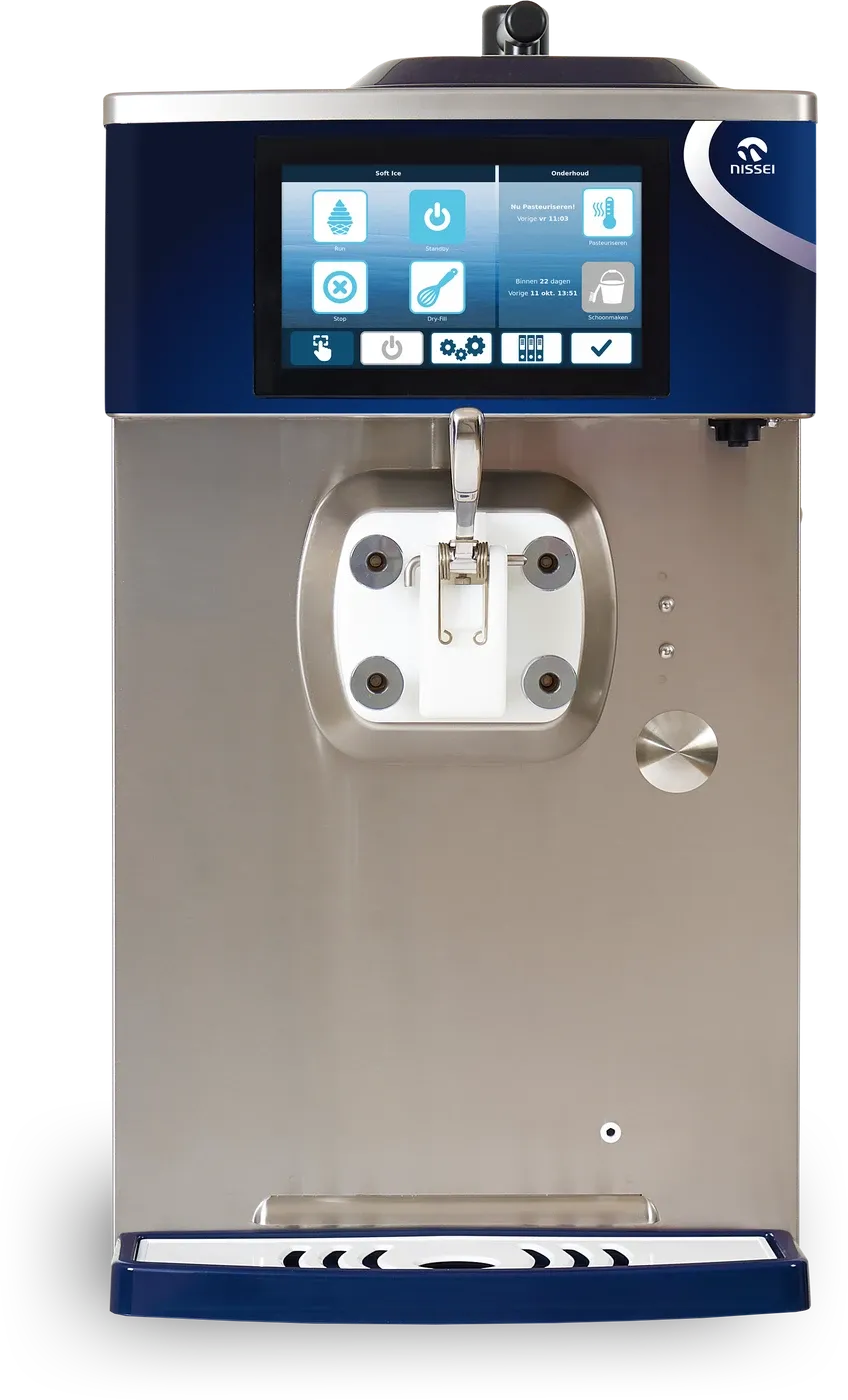
- On modern machines such as the Nissei RAPP pump, overrun can be set on the display (according to Nissei)
When gravity is better
With gravity, the mix flows into the cylinder by itself. Less air gets into the ice cream, the taste is more intense and cleaning is simpler. For frozen yogurt that is an advantage: yogurt needs a strong taste, many yogurt mixes are too dense for a pump, and at high overrun yogurt becomes unstable.
That is why Nissei builds its own frozen yogurt series without a pump, with pasteurisation.
How to recognise a good gravity machine
- Separate cooling systems for each side, so one flavour does not slow the other down
- Enough output to freeze the mix properly even with long queues
- Pasteurisation, so little mix is lost
- No “air bubble generators” that merely promise what a pump does
A word on self-service
In frozen yogurt shops, guests often serve themselves and pay by weight. Dense yogurt weighs honestly. Watery, airy yogurt sold by weight does not feel fair to guests, even if they served it themselves.
Related
Frequently asked questions
Is a machine with a pump harder to clean?
A little, because of the pump. Modern pumps come apart faster, and with pasteurisation you clean less often anyway.
Can I make frozen yogurt in a pump machine?
With a suitable mix, yes, but frozen yogurt gets denser and stronger with gravity. There are dedicated models for it.
How much overrun is right?
That depends on the product and the mix. Classic soft serve takes considerably more air than frozen yogurt or strong specialty flavours.
Sources
We quote makers’ figures with their source. Experience from our kiosk is marked as such.