1. Output on your busiest day
Do not plan for an average day but for a Saturday in August. How many portions go over the counter in the busiest hour? A machine that cannot keep up then delivers soft, watery ice cream, and the queue gets longer.
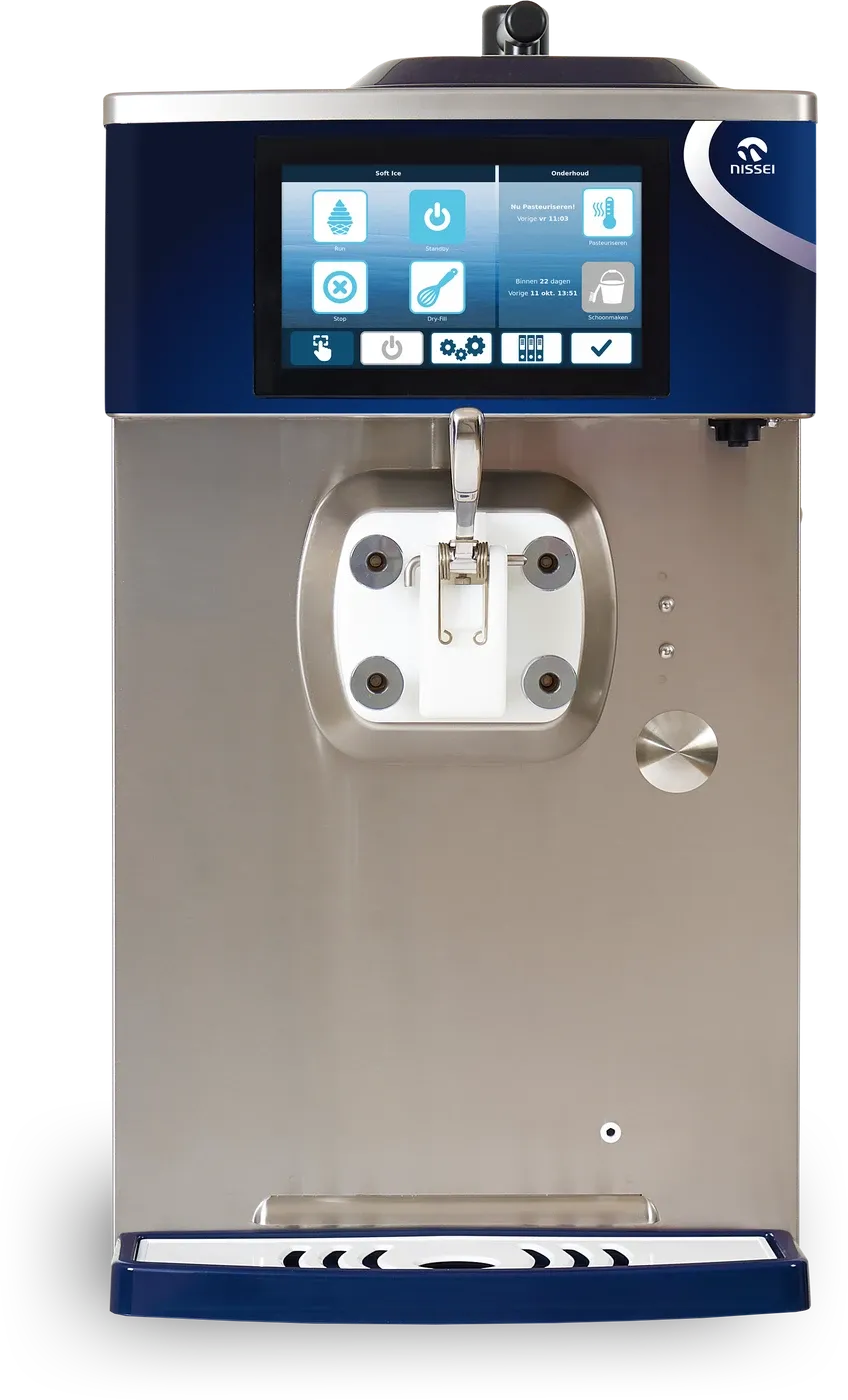
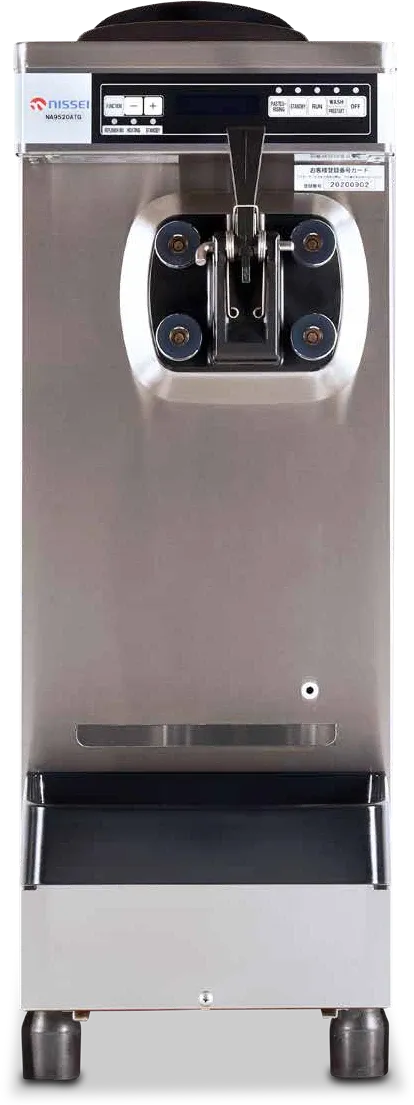
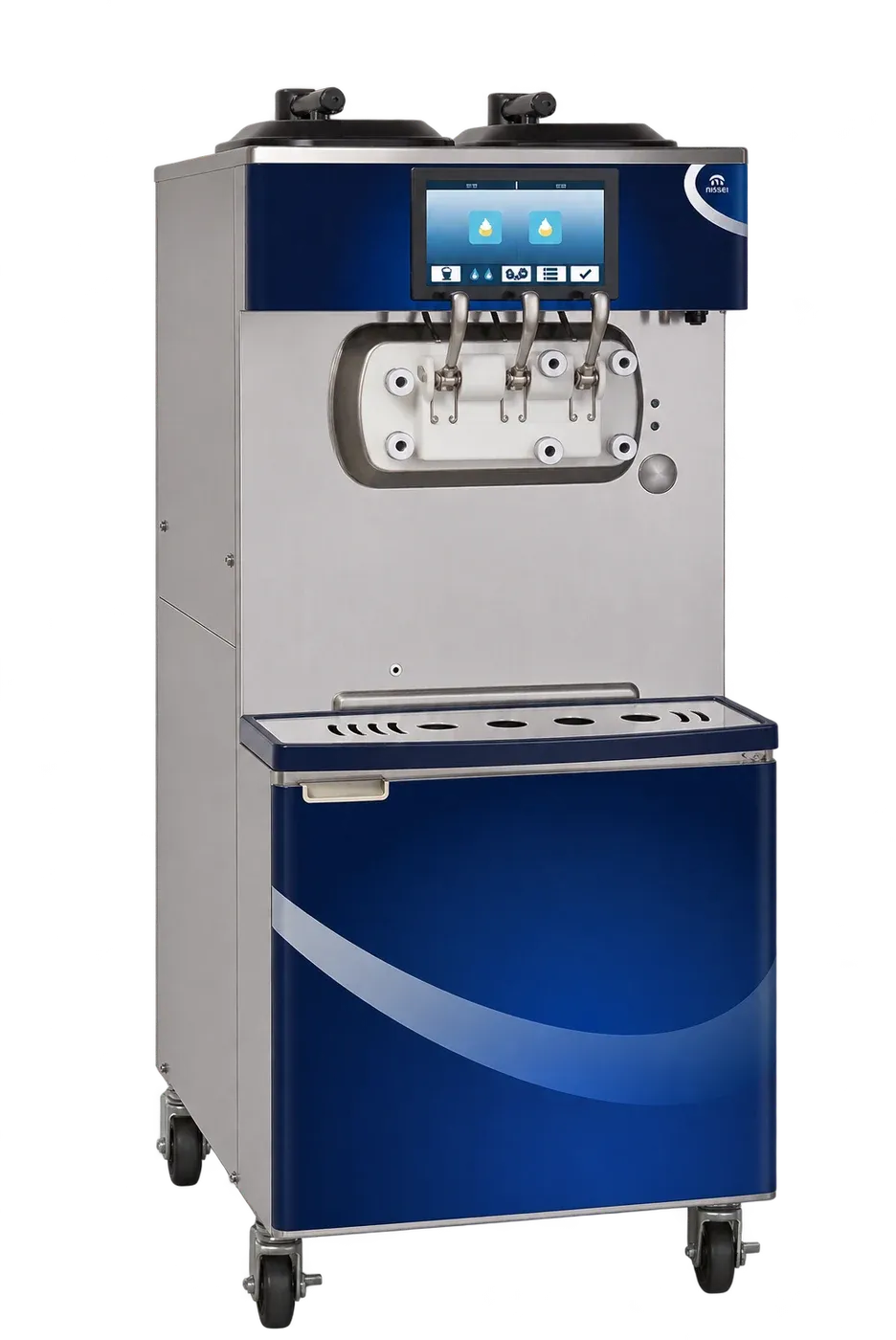
Makers state output in litres per hour. According to Nissei, the Compact manages about 30 l/h and the Titan Duo 55 + 75 l/h from two cylinders. What matters is not just the peak, but how quickly the machine is back at temperature after a wave of orders.
2. Air or water
Air-cooled machines are easy to set up, but they release their heat into the room and lose output when it gets hot. Water-cooled machines stay stable but need a water supply and drain. More in the guide Air or water cooling.
3. Pump or gravity
A pump brings air into the ice cream: it gets creamier and you get more portions from the same amount of mix. Gravity gives a denser ice cream with a stronger taste, ideal for frozen yogurt. More in the guide Pump or gravity.
4. Pasteurisation
A machine with pasteurisation regularly heats the mix and cools it down again. According to Nissei, it then only needs dismantling and cleaning every six weeks, instead of every few days. That saves work and mix. More in the guide Pasteurisation in soft serve.
5. One flavour, two flavours, twist
With two flavours and twist (mixed) you offer three options from one machine. Then look for two separate cooling systems: when one side is in high demand, the other must not suffer.
6. Space, power and water
- Footprint and clearance for air (on air-cooled machines)
- Power: many floor models need 400 V, small countertop machines often 230 V
- Water supply and drain for water cooling
- Indoors or outdoors: direct sun costs output
- According to Nissei, the Compact is only 29 cm wide: a countertop machine fits almost anywhere
7. Service and spare parts
Even the strongest machine is no help if a part is missing on a busy day. Ask before you buy: where is the nearest technician? How fast do spare parts arrive? Is there training for the team? Our service by region is under Service and advice.
8. New, used or low-cost
A low-cost new machine or a used one from a big brand: both can work, both carry risks. That is how we started ourselves. More in the guide New or used.
The checklist
| Question | Why it matters |
|---|---|
| Portions in the busiest hour? | Sets the output in l/h |
| How warm does the site get? | Air or water |
| Classic soft serve or frozen yogurt? | Pump or gravity |
| Who cleans, how often? | Pasteurisation |
| One or two flavours? | Separate cooling systems |
| 400 V, water, drain available? | Which models fit at all |
| Technician nearby? | Downtime on busy days |
Related
Frequently asked questions
Which soft serve machine is the best?
The one that suits your queues, your space and your season. For long queues and heat we recommend water-cooled machines with pump and pasteurisation; for little space, a countertop machine.
What does a commercial soft serve machine cost?
That depends on output, cooling, pump, pasteurisation and equipment. Price on request, after a short conversation about your business.
Do I need 400 V?
Many floor models do, small countertop machines often do not. We check which connection you have before the quote.
Can I rent a soft serve machine?
Not from us. Why we sell rather than rent is explained in the guide “Rent or buy?”.
Sources
We quote makers’ figures with their source. Experience from our kiosk is marked as such.